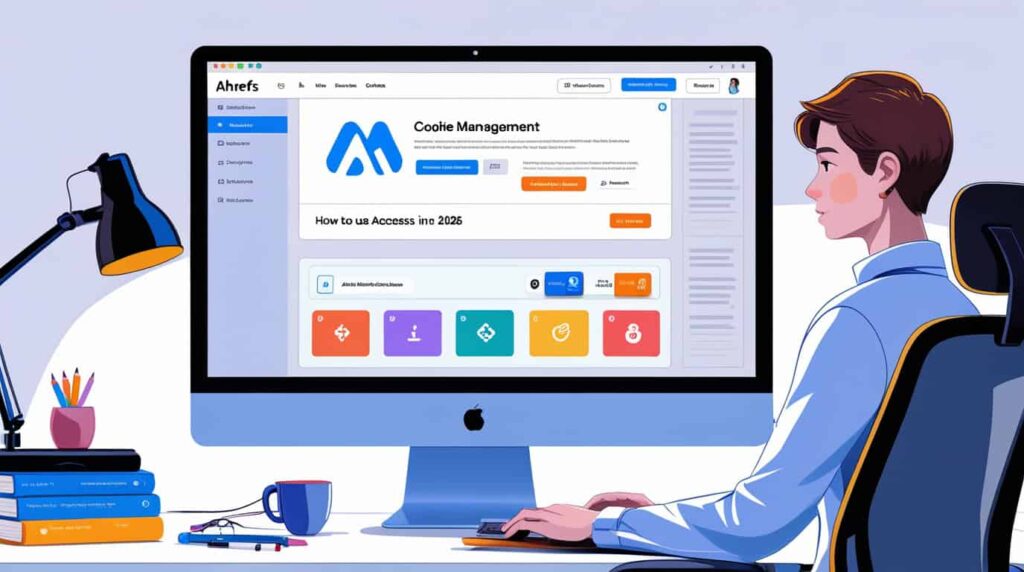
Why “Ahrefs Cookies 2026” poses a major risks to your security?
Making a successful SEO strategy often feels like pay-to-play. When you realize that many premium tools such as Ahrefs cost several hundred dollars per month, is it any surprise that bootstrapped entrepreneurs, students, and digital marketers look for shortcuts?
This hunt for affordable access often ends in the realm of “shared cookies.” There are “premium account cookies.”
You could even be one who has entered a search for “Ahrefs cookies Jan 2026,” hoping that it will offer you a way into the program. But this action could mean stepping on a landmine. Picking up a product for which people normally pay thousands of dollars per month to use for nothing is very tempting, and websites offer high-quality keyword research tools, backlink data –serv the s ave 1002 — but getti it this way is highly risky. It hijacks your session via shared cookies, meaning that your personal data, e.g., Google Account passwords and browser software, are put at risk.
This guide looks at what are these “cookie methods” really, Why do sites employ future dates such as “2027” to attract people into downloading them, And what is the major threat to your security if you use them? Most importantly, it will also explore truly legal methods of getting Ahrefs’ data for FREE.
What is the “Ahrefs Cookie” Approach?
– To character this method as risky, you first need to understand How it works. When you sign into a website like Ahrefs, the server gives your browser a “session cookie.” This cookie is a kind of digital passport. It tells the website, “I am already signed in–so let me in. “
The “cookie method” is when you export this digital passport of the original person who has purchased the service into another person’s browser using an extension such as EditThisCookie on Chrome. It tricks servers at Ahrefs into thinking that the second user is actually just the first one, who paid for his own membership.
The “2026” date scam
You might wonder exactly why seeking certain pension dates has now grow to be all so cluttered in the end result pages. Such as “January, February, March… 2026.”
This is a classic SEO technique that websites that distribute stolen cookies often use. By throwing in every month of the year and future dates as their titles, they hope to rank for whatever variation of the search term might come up. It is a sign of poor content quality, automated to draw traffic to ad-dump pages or sites with malware rather than offer real services.
The Risk of Shared Cookies
Using shared cookies is not just harmless but also requires deliberately bypassing security protocols as well. This is why you ought to hesitate before downloading a cookie script or extension.
First Avenue for Malware Extension Browsers
Ordinarily, if you wish to insert a stolen cookie onto your browser, a specific browser extension has to be installed. While there are indeed legitimate cookie editors out there, the tutorials that provide “free Ahrefs access” often direct users toward harvested or third party extensions hosted on sketchy websites. It’s wicked practice! And then there’s the notion of using the official Chrome Web Store.
In effect, these extensions can read and write on access to your browser. When you install one, a bad actor could gain access to:
Your browsing history
Passwords stored within the browser
Caches from other sensitive to security site,s such as your email, bank account, or social media accounts.
The “Noisy Neighbor” Problem
If the security problem fails to deter you, the user experience certainly will. Cookies are public knowledge. Therefore, hundreds and often thousands of people will make at the same time one account under multiple strokes.
When several different IP addresses from two or more countries access one account in a matter of minutes, it is immediately banned and marked as suspect. This gives rise to a vicious cycle. You spend 20 minutes finding a good cookie, only to see it expired or can’t work 30 seconds after you open your keyword research window.
Loss of Data Privacy
Working in a shared account means you are working in a public space. Any things you create, keywords lists you put together, and audits of web sites that you perform are all public to whomever is using that same cookie.
If you are working on a client site or developing a stealth startup, then you are dissecting your plan of action out onto the Internet to unknown third parties. You get none of the benefits of inclusion in a national hijacked session.
Legitimate (and Free) Alternatives to Cookie Sharing
The truth is that you can get data of that level without hijacking cookies. Ahrefs and competitors offer their users free online tools: these can turn out to be quite powerful yet readily accessible for most beginners or small business owners on a limited budget.
Ahrefs Webmaster Tools (AWT)
This is the best-kept secret in SEO. A free service with no strings attached: Ahrefs Webmaster Tools (AWT), which is not a trial period but always free of charge.
Verifying your website ownership (commonly through Google Search Console), AWT lets you check out:
Site Audit: It checks over 100 technical SEO problems on your website.
Site Explorer: You can see all the backlinks to your website and keywords you hair. For free.
Although AWT charges for competitor research, it gives you for free the data you are generally most interested in as the webmaster.
Semrush offers a “forever free” account option. It is limited, but it allows you to:
Analyze a limited number of competitors.
Run a site audit.
Do nearly 10 daily keyword searches.
For those who are free-lancing or just starting out as an academic writer, this is a much better and more stable choice than searching for cookies.
Ubersuggest
Neil Patel’s Ubersuggest offers a generous free tier that gives you keyword volume, difficulty scores, and ideas for content.
Not as detailed as Ahrefs data, perhaps, but enough information to plan your content and do a little competitive analysis.
Google Search Console and Keyword Planner
Don’t overlook the data source itself.
Google Search Console (GSC): This gives the most accurate data on what keywords you are actually ranking for and your click-through rates.
Google Keyword Planner: Primarily for Google Ads, this free tool is perfect for finding keyword volume and trends.
The Ethical Argument
Beyond the security risks and aggravation, there’s also an ethical aspect. Ahrefs invests millions of dollars a year in crawling, storing petabytes of data and developing their user interface. To attempt sidestepping their payment gateway through session hijacking is both a breach of their Terms of Service and a threat to the wider community.
If you really want a future in digital marketing, relying on black-hat hacks to get there is a poor beginning. It shows a readiness to go off the rails rather than building the necessary infrastructure for success.
Secure Your SEO Strategy
The thought of cadging a $99/month tool for free is tempting enough, but the costs of bothering “Ahrefs cookies” are deceptive and high. From the trouble of malware infections and leaks, through to one account ban after another–it’s just not worth it.
Ahref’s Webmaster Tools and Google Search Console combined together could lay the foundation for your SEO work that is legitimate and free of shady browser extensions.
If you catch them with the jar: In noname digital security failure era and in doubt of details
Ahrefs cookies are in demand with a rise of over 800% in searches in 2026. Why it is unsafe to use session hijacking for free access to this service. Discover the safe and means of getting SEO data without cash outlay.
My name is Janet Jackson Seo and I work as a SEO Expert. I appreciate the process of developing an innovative approach and employing logic, particularly when it concerns future studies and SEO optimization. As an SEO expert I have known how to set up SEO campaigns fully and how to monitor their achievements.